
When Do Roses Bloom in Arizona and How to Time Your Garden
Roses in Arizona bloom from early spring through late fall, giving you beautiful flowers almost all year long. If you prune your roses in late winter or early spring, you can enjoy multiple blooming cycles. It’s all about timing and care to keep your garden vibrant.
Plant heat-tolerant varieties like Mr. Lincoln or Iceberg in February or March. This helps your roses get strong growth before the intense Arizona heat arrives.
Water your roses deeply once a week, but be ready to increase watering during the hot summer months. Mulching is a great way to conserve moisture and keep roots cool.
Don’t forget to deadhead regularly—that means removing spent blooms to encourage new ones. When you time everything right and follow these tips, you’ll have a thriving rose garden full of color all season long.
There’s really so much more to learn, but these basics will get you off to a great start!
Key Takeaways
- Roses in Arizona bloom from early spring (March) through late fall (October). You can expect multiple blooming cycles each year, which is pretty exciting.
- It’s best to prune your roses in late January to early February. This helps encourage strong spring blooms and keeps the flowers coming throughout the season.
- When planting, go for heat-tolerant rose varieties like Mr. Lincoln and Iceberg. Early spring (Feb-Mar) or fall are the perfect times to get them in the ground for the best growth and bloom timing.
- Make sure to water deeply and mulch consistently. This will help your roses survive and keep blooming during Arizona’s hot summer months.
- Don’t forget to deadhead regularly. Also, avoid heavy pruning in late summer to extend the blooming period and keep your rose bushes healthy and happy.
When and How Do Arizona Roses Bloom?
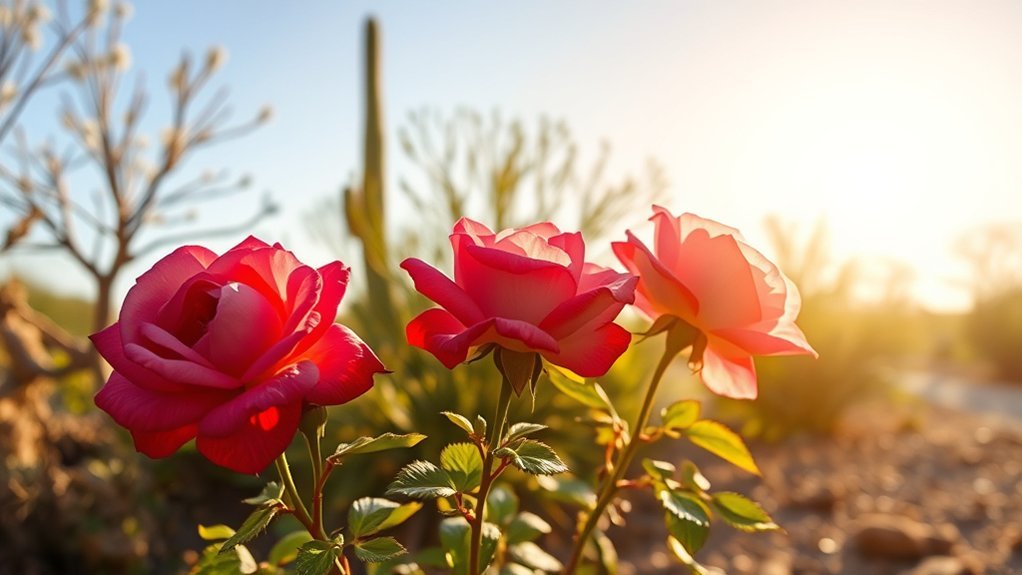
Although Arizona’s climate can be challenging for many plants, roses here bloom from early spring through late fall. They often produce multiple flower cycles each year.
You’ll notice roses in winter, especially desert-adapted shrub roses, start preparing for spring growth during the cooler months. Proper bloom timing begins with pruning in late winter or early spring, usually between February and April.
This encourages healthy, vibrant blooms as temperatures rise. In warmer areas, roses can start blooming as early as March and continue until late October, often re-blooming after a brief pause.
Best Heat-Tolerant Rose Varieties for Arizona Gardens
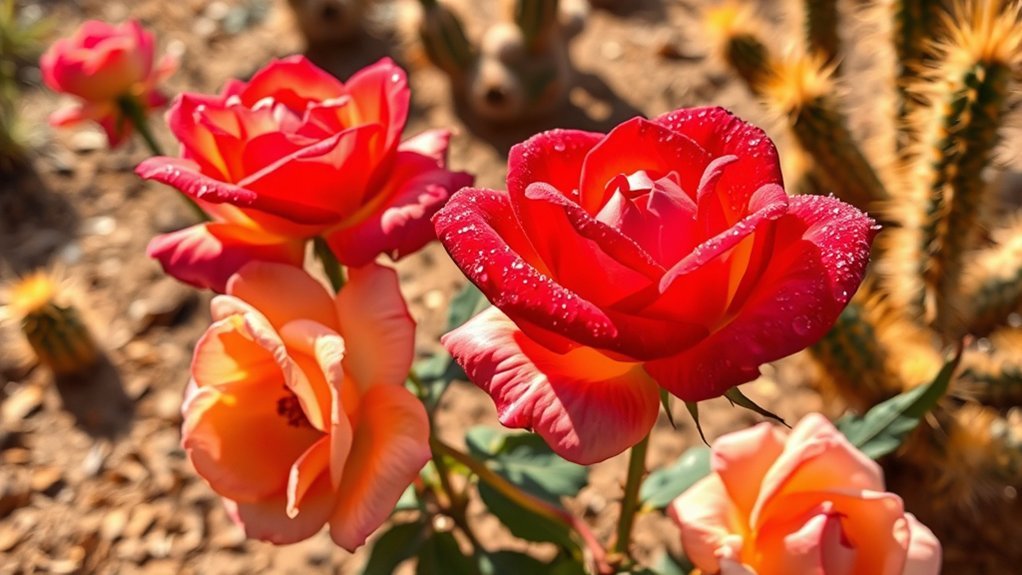
Since Arizona’s intense heat can quickly stress many plants, choosing heat-tolerant rose varieties is essential for a thriving garden. Varieties like Mr. Lincoln, Iceberg, Double Delight, and Belinda’s Dream are specially bred to handle Arizona’s high temperatures and intense sunlight.
These heat-tolerant roses consistently deliver vibrant, long-lasting blooms, making them ideal for Arizona gardens. Shrub roses and hybrid teas stand out for their resilience, offering both beauty and durability.
To boost your success, plant these rose varieties in early spring or fall, when conditions are milder. By selecting these hardy roses, you’ll enjoy a flourishing garden despite the desert heat, ensuring colorful blooms throughout the hot growing season in your Arizona garden.
Preparing Your Desert Soil for Healthy Rose Growth

To grow healthy roses in Arizona’s desert climate, you need to prepare your soil carefully because native soils tend to be alkaline, rocky, and low in organic matter. Start by lowering the soil pH to 6.0–6.5 using sulfur amendments to create a better environment for your roses.
Preparing alkaline, rocky desert soil by lowering pH with sulfur is key for healthy roses in Arizona.
Next, incorporate plenty of compost and well-aged manure to boost organic matter. This improves fertility and helps your soil retain water, which is super important in the desert.
If your soil is compacted or heavy, consider building raised beds. They enhance drainage and help prevent root rot, giving your roses a healthier start.
Finally, apply a 2-4 inch layer of mulch around the base of your roses. Mulch helps stabilize soil temperature and conserves moisture, which is essential for thriving roses in Arizona’s extreme heat and cooler nights.
Pruning Schedule: When to Cut Roses for More Blooms
When you prune your roses at the right time, you encourage more vibrant blooms throughout the year. In Arizona, the best pruning schedule is to prune roses in late January to early February, just before their bloom cycle in April.
Focus on removing dead, crossing, or damaged canes and make cuts above outward-facing buds at a 45-degree angle. This helps your roses grow strong and healthy.
For desert roses, wait until after the last frost date, usually mid to late February, when buds swell and turn reddish. You can also do a light pruning in September, cutting no more than one-third of the plant to promote fall blooms without stressing it.
Avoid pruning during summer, as it can harm your roses and reduce flowering. Stick to this pruning schedule for healthier, fuller plants.
Watering and Fertilizing Tips for Thriving Arizona Roses
Pruning sets the foundation for healthy roses, but proper watering and fertilizing keep them thriving through Arizona’s challenging climate. During peak heat, give your roses a deep soak twice a week to encourage strong roots and vigorous growth.
Water early in the morning to reduce evaporation and lower fungal risks. Adjust your watering schedule as weather changes—more in hot, dry spells and less during cooler, rainy periods.
For fertilizing, apply a balanced 10-10-10 fertilizer monthly from spring through late summer to support continuous blooms. You can also use organic options like fish emulsion or alfalfa meal for steady nutrient absorption.
With consistent watering and fertilizing, your roses will flourish even in Arizona’s tough conditions.
How to Keep Your Roses Healthy: Pest and Disease Control
Although Arizona’s dry climate can limit some issues, your roses still need regular checks for pests like aphids and spider mites to stay healthy. Use insecticidal soap or water sprays to control spider mites without harming beneficial insects.
Make sure to keep good airflow around your plants to reduce fungal problems such as black spot. It’s also important to prune dead canes and remove debris to prevent pest and disease buildup.
When needed, apply fungicides and pesticides as directed to manage outbreaks effectively. Staying on top of these steps will help your roses thrive and look their best.
| Issue | Signs | Control Method |
|---|---|---|
| Spider Mites | Webbing, yellow leaves | Insecticidal soap, water spray |
| Black Spot | Black spots on leaves | Fungicides, good airflow |
| Aphids | Sticky residue, curled leaves | Insecticidal soap, pruning |
| Disease Debris | Dead canes, fallen leaves | Remove debris, prune |
Seasonal Rose Care Routines to Maximize Flowering
To get the most blooms from your roses, you’ll need to time your pruning carefully and adapt it with the seasons. Watering and fertilizing at the right moments also play a big role in keeping your plants strong and vibrant.
Plus, staying on top of pest and disease control ensures your roses can focus their energy on flowering. It’s all about giving them the right care at the right time. That way, your roses will reward you with beautiful, abundant blooms.
Pruning Timing Strategies
When you time your rose care correctly in Arizona, you’ll encourage a vibrant display of blooms throughout the year. Focus your pruning timing around early February, just after the last frost, to remove dead or weak canes and cut above outward-facing buds. This promotes vigorous spring and early summer growth.
Light pruning in September also helps trigger a fall flush of flowers. Avoid heavy summer pruning, as it stresses your roses; instead, shape the plant gently and practice regular deadheading to encourage continuous blooming.
In Tucson, where roses bloom during winter, aligning your pruning to their natural cycle is key—unlike traditional winter pruning elsewhere. Following these pruning timing strategies will keep your roses healthy and blooming beautifully through Arizona’s unique seasons.
Watering And Fertilizing
Because Arizona’s climate swings from intense heat to milder seasons, you’ll need to adjust your watering and fertilizing routines to keep your roses thriving. Water deeply but infrequently, aiming to moisten 18-24 inches of soil. This is especially important during peak heat to promote strong root growth.
For fertilizing, apply a balanced 10-10-10 fertilizer monthly from spring through late summer. Tailor amounts based on your rose’s health and growth. Organic options like fish emulsion or alfalfa meal provide steady nutrients and improve soil quality.
After pruning in late winter or early spring, fertilize to encourage vigorous new growth and more blooms. During the hottest months, reduce fertilizing to avoid stressing your plants with excessive, soft growth. Consistent watering and fertilizing are essential rose care steps to maximize flowering in Arizona’s unique climate.
Pest And Disease Control
How can you keep your roses healthy and blooming beautifully despite Arizona’s challenging environment? Start with regular pest control by inspecting your plants during the blooming season to catch aphids, spider mites, and thrips early.
Use insecticidal soap or water sprays to manage pests effectively without harming beneficial insects. It’s a simple way to keep those pesky critters in check.
To prevent fungal diseases like powdery mildew, guarantee good airflow around your rose bushes by pruning dead or diseased canes and removing fallen debris. This also helps reduce pest habitats and sources of infection.
Choose disease-resistant rose varieties and practice proper watering techniques to avoid common problems such as rust and blight. By staying vigilant and maintaining these habits, you’ll keep your roses thriving and flowering abundantly in Arizona’s desert climate.
Extending Your Rose Bloom Season in Arizona’s Desert Climate
To keep your roses blooming longer in Arizona’s desert, focus on regular pruning to encourage multiple blooms throughout the season. You’ll also want to adopt consistent watering strategies that adjust with the year’s heat levels.
Choosing heat-tolerant varieties will give your garden a better chance to thrive under the intense sun. It’s all about giving your roses the right care to beat the desert heat and keep those blooms coming!
Pruning For Multiple Blooms
When you prune your roses in late January to early February, you stimulate new growth that leads to multiple blooms throughout Arizona’s growing season. Proper pruning, cutting just above outward-facing buds, improves air circulation and encourages early bloom.
Throughout the season, light deadheading removes spent flowers, promoting continuous flowering. Avoid heavy pruning in late summer or fall, as it can weaken your rose’s health and reduce blooms.
| Task | Timing | Benefit |
|---|---|---|
| Pruning | Late Jan – Early Feb | Stimulates multiple blooms |
| Deadheading | Throughout season | Extends bloom period |
| Cut Location | Above outward buds | Shapes plant, improves air flow |
| Heavy Pruning | Avoid late summer/fall | Prevents bloom reduction |
Follow these steps to keep your roses blooming longer and healthier. You’ll be glad you did!
Watering Strategies Year-Round
Wondering how to keep your roses thriving through Arizona’s harsh desert climate? Focus on consistent watering with deep watering once a week to reach 18-24 inches deep, promoting strong roots and longer blooms.
Water early in the morning to reduce evaporation and prevent fungal diseases common in desert areas. During the peak summer heat, increase watering to 2-3 times weekly to keep your roses well-hydrated.
Mulching around the base is essential—it retains soil moisture, regulates temperature, and cuts down how often you need to water. In winter, reduce watering since roses enter dormancy, but don’t let the soil dry out completely during extended dry spells.
Following these watering strategies year-round will help extend your rose bloom season despite Arizona’s challenging desert environment.
Selecting Heat-Tolerant Varieties
Although Arizona’s desert climate poses challenges for rose gardening, choosing heat-tolerant varieties like Mr. Lincoln helps extend your rose bloom season. These roses thrive in high temperatures and bloom reliably from early spring through fall.
For best results, focus on planting time in early spring (February-March). This way, your roses can establish before the hottest months arrive.
Here are some top heat-tolerant roses for Arizona’s desert climate:
| Rose Variety | Characteristics |
|---|---|
| Mr. Lincoln | Heat-resistant, deep red blooms |
| Iceberg | Drought-resistant, white flowers |
| Double Delight | Fragrant, color-changing petals |
Selecting these varieties guarantees longer blooms with less water. Perfect for your desert garden!
Frequently Asked Questions
What Is the Best Time to Plant Outdoor Flowers?
You should plant outdoor flowers in early spring, around February or March, or in fall, like October and November.
These times help your flowers establish roots before extreme heat or frost can harm them. It’s all about giving them the best start possible.
Can I Put Miracle-Gro on My Roses?
You can use Miracle-Gro on your roses, but don’t overdo it—over 50% of gardeners see fewer blooms with excess fertilizer.
Apply every two weeks during the growing season for vibrant flowers without risking disease or too much foliage.
It’s all about finding the right balance to keep your roses healthy and blooming beautifully.
Is There a Superbloom in Arizona?
There isn’t a superbloom happening right now in Arizona, but you can watch for heavy winter rains.
When they occur, expect vibrant wildflowers to cover the desert, usually between late winter and early spring. It’s really something to look forward to!
When to Trim Roses in Arizona?
You should trim roses in Arizona from mid-February to late February after the last frost. Light pruning in September also helps.
This timing encourages healthy growth and blooming, especially for bush roses. It’s really all about giving your plants the best chance to thrive.
Conclusion
By timing your rose care right, you can enjoy blooms almost year-round in Arizona’s desert climate. For example, Maria in Phoenix prunes early spring, chooses heat-tolerant varieties like ‘Desert Rose,’ and follows a strict watering schedule. This helps her extend her garden’s bloom season.
With proper soil prep, pruning, and pest control, you’ll keep your roses thriving despite the heat. Stick to these steps, and your desert garden will flourish beautifully, no matter the season. Timing your rose care in Arizona is key to getting those vibrant blooms. When you combine the right rose varieties with consistent watering and attention to soil health, your garden can stay colorful and lively all year. So, if you want to enjoy the best of rose blooms in Arizona, focus on proper pruning, heat-tolerant plants, and ongoing care to beat the desert heat and keep your roses thriving.