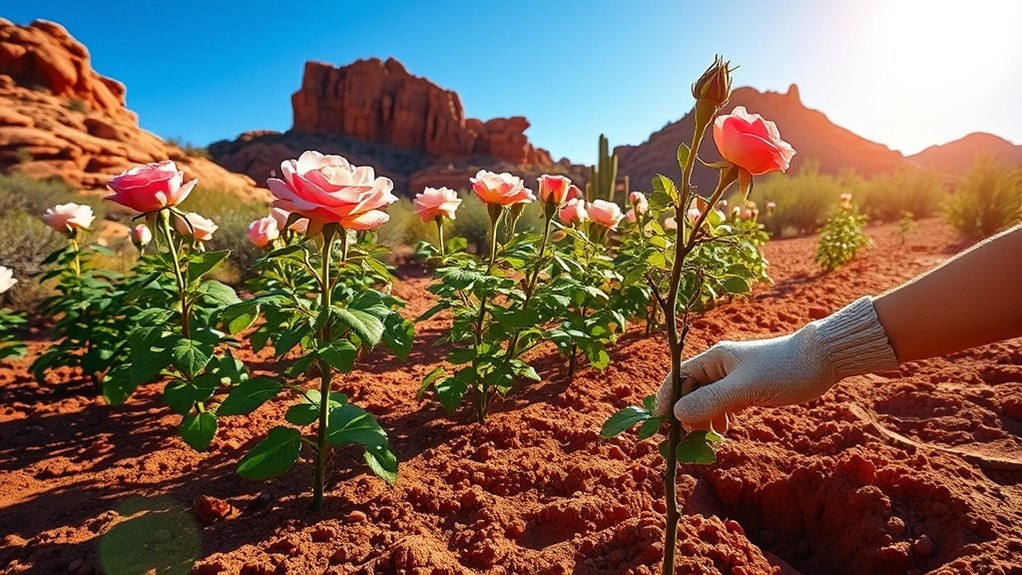
5 Tips for When to Plant Roses in Arizona
When planting roses in Arizona, it’s important to choose heat-tolerant varieties like Belinda’s Dream or Iceberg. These types handle the desert sun much better, giving your roses a fighting chance to thrive.
Timing matters too—plant in fall or early spring so the roots can settle in before the extreme heat arrives.
Make sure your soil drains well and is rich in organic matter; this helps keep your roses healthy.
Water deeply 2-3 times a week to encourage strong root growth.
During the hottest months, providing some shade can reduce stress on your plants and keep them looking their best.
Follow these simple tips, and you’ll be on your way to growing beautiful, healthy roses that can handle Arizona’s unique climate.
Stick around for more useful advice to help your garden flourish!
Key Takeaways
- Plant roses in fall (October-November) or early spring (February-March) for optimal root establishment before extreme heat. This timing really helps your roses settle in and get strong.
- Bare-root roses should be planted while dormant, from January to mid-February. It’s the best way to give them a good start before they wake up.
- Container roses can be planted later in early spring, between March and April. This gives you a bit more flexibility if you didn’t get to plant earlier.
- Avoid planting roses during peak summer months to prevent heat stress and poor survival. The Arizona heat can be brutal, so it’s best to wait until it cools down.
- Choose heat-tolerant rose varieties suited for Arizona’s climate to improve planting success. Picking the right type can make a big difference in how well your roses do.
Choosing Heat-Tolerant Rose Varieties for Arizona
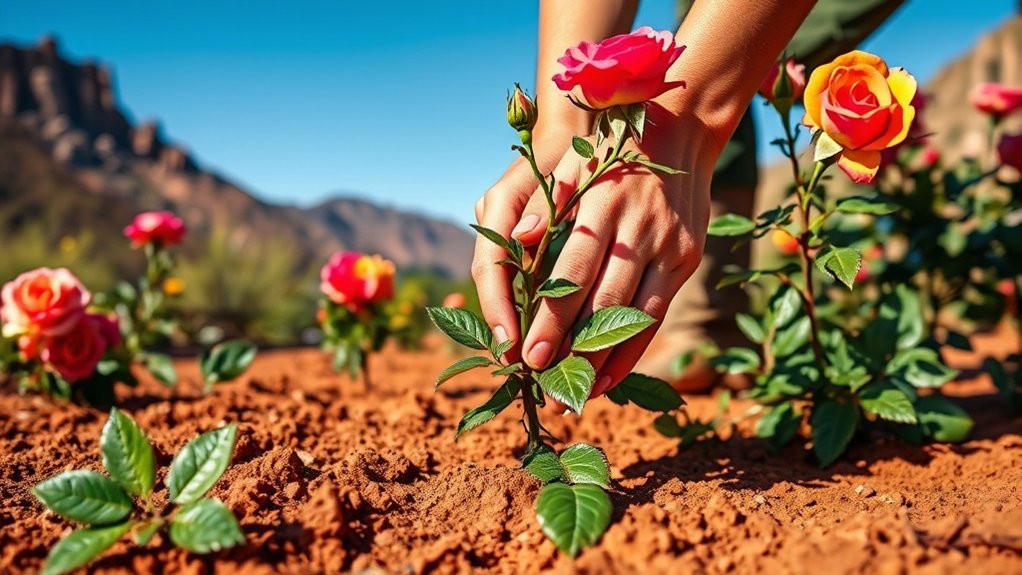
Wondering which rose varieties will thrive in Arizona’s intense heat? Choosing heat-tolerant roses is key for success in desert conditions. You’ll want to focus on cultivars bred or recommended specifically for Arizona’s low desert climate, like Belinda’s Dream, Iceberg, and Mr. Lincoln.
These rose varieties have a higher survival rate because they’re adapted to withstand the scorching temperatures. Hybrid teas, floribundas, and shrub roses generally perform better than traditional old garden roses in this environment.
To boost your chances, buy plants from local nurseries that specialize in climate adaptation, ensuring the roses are suited to your area. By selecting the right cultivar during the most suitable planting season, you’ll set your garden up for healthy growth despite Arizona’s challenging heat.
Best Seasons for Planting Roses in Arizona
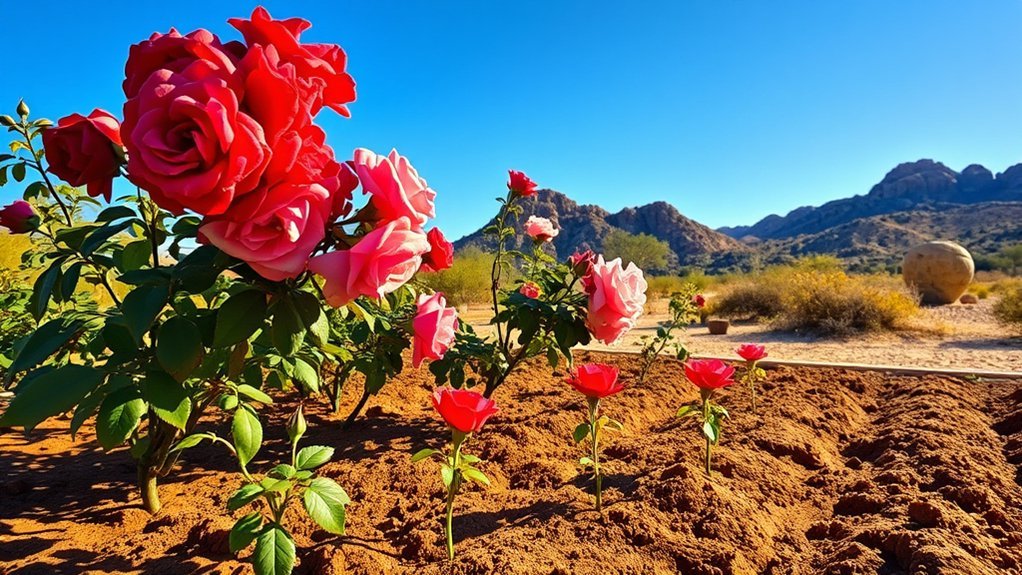
Although Arizona’s climate can be challenging, planting roses during the fall (October-November) or early spring (February-March) gives your plants the best chance to establish strong roots before facing extreme temperatures. These best seasons allow your roses to develop a robust root system ahead of the summer heat or winter cold.
If you’re working with bare-root roses, aim to plant them while dormant, typically from January to mid-February, maximizing their survival. Container roses offer more flexibility and can be planted later in early spring, around March or April.
This timing gives them time to settle before the intense heat arrives. Just avoid planting during peak summer, as the summer heat stresses roses and reduces your chances of success. Timing your planting right guarantees healthier, thriving roses in Arizona’s climate.
Preparing Soil and Planting Sites for Roses
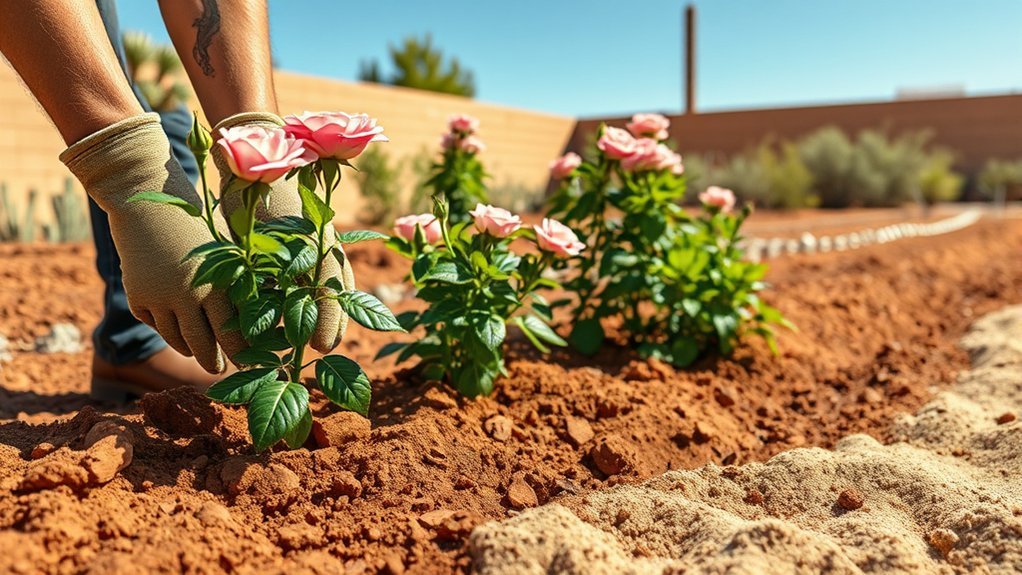
To give your roses the best start, pick a planting site with well-draining soil that receives at least six hours of direct sunlight daily. Ideally, look for morning sun with some afternoon shade.
Amend native soil by mixing in organic matter like compost and perlite to improve drainage and nutrient content. You might also want to build raised beds to enhance drainage and have better control over soil conditions.
Check your soil’s pH and adjust soil acidity as needed by adding soil sulfur. Aim for a pH between 6.0 and 6.5 to keep your roses happy.
Also, make sure your planting site is free from large trees or shrubs that compete for water and nutrients. That way, your roses get all the good stuff they need to thrive.
| Step | Tip |
|---|---|
| Choose site | Well-draining soil, ample sunlight |
| Amend soil | Add compost, organic matter |
| Adjust pH | Use soil sulfur, target 6.0–6.5 |
| Raised beds | Improve drainage, soil control |
How to Water New Roses for Best Growth
When you plant new roses, watering them deeply 2 to 3 times a week during the first month encourages strong root growth. It’s all about keeping the soil consistently moist right where the roots are. This helps your roses develop healthy, deep roots.
Try using drip irrigation or a soaker hose for efficient watering that reaches 18-24 inches deep. Water early in the morning to cut down on evaporation and keep moisture levels just right. Plus, watering early helps reduce the chance of disease.
Avoid shallow watering or light sprays since they can actually weaken the roots. You want the water to soak in deeply for the best results.
Keep these tips in mind for a proper water schedule:
- Water deeply to encourage robust root development
- Target the root zone to maximize soil moisture
- Use drip irrigation for consistent watering
- Water early morning for best soil quality and moisture retention
Tips to Protect Roses From Arizona Heat
Since Arizona’s heat can quickly stress your roses, you’ll want to take steps to protect them, especially during the hottest months. Start by choosing heat-tolerant rose varieties suited for hot climates.
Plant your roses in early morning or late afternoon to avoid peak high temperatures. Avoid mid-summer planting when the heat is most intense.
Provide temporary shade during the hottest part of summer, especially for new plants. Also, select sites with afternoon shade to reduce sun exposure.
Water deeply and consistently during the first few weeks to help your roses establish strong roots. Proper care, including watering deeply and offering afternoon shade, guarantees your roses thrive despite Arizona’s challenging heat.
Following these tips helps your roses flourish even under intense desert sun. You’ll see them blooming beautifully in no time!
Frequently Asked Questions
What Are the Best Tips for Planting Roses in Arizona?
Plant your roses in cooler months and choose heat-tolerant varieties. These steps give your plants the best start in Arizona’s tough desert climate.
Make sure they get about six hours of sunlight, but some afternoon shade really helps too. It keeps them from getting scorched during the hottest part of the day.
Also, amend your soil to improve drainage and adjust the pH. This creates the ideal environment for your roses to grow strong.
When it comes to watering, go for deep but infrequent watering. This encourages roots to grow deeper, making your roses more drought-resistant over time.
What Are Common Rose Growing Mistakes?
You’ll often make mistakes like planting during extreme heat, choosing non-heat-tolerant roses, neglecting soil amendment, overcrowding plants, and watering improperly.
Avoid these to help your roses thrive and stay healthy in Arizona’s climate.
Do Coffee Grounds Really Help Roses?
You might be surprised, but yes, coffee grounds can help roses by adding nitrogen and improving soil.
Just don’t overdo it—mix them into compost to avoid mold or fungal problems around your rose roots.
Are Roses Better Planted in Pots or Ground?
You’ll find roses easier to manage in pots since you control soil and water better, especially in Arizona’s tough conditions.
But if you want large beds, ground planting works—just prep soil well and avoid summer heat.
Conclusion
By choosing heat-tolerant roses and planting them during Arizona’s cooler months, you’ll give your roses the best start. Imagine Sarah, who planted ‘Mutabilis’ roses in early February, prepared her soil with compost, and watered consistently.
Her roses thrived despite the harsh summer heat. With the right timing, soil prep, and care, your roses can flourish too—turning your garden into a vibrant oasis even in Arizona’s challenging climate.
So, if you want beautiful blooms, focus on planting roses in the cooler months, use heat-tolerant varieties, and keep up with proper watering. These simple steps will help your roses survive Arizona’s heat and grow strong. With some patience and the right approach, your rose garden can be a stunning, colorful retreat all year round.